
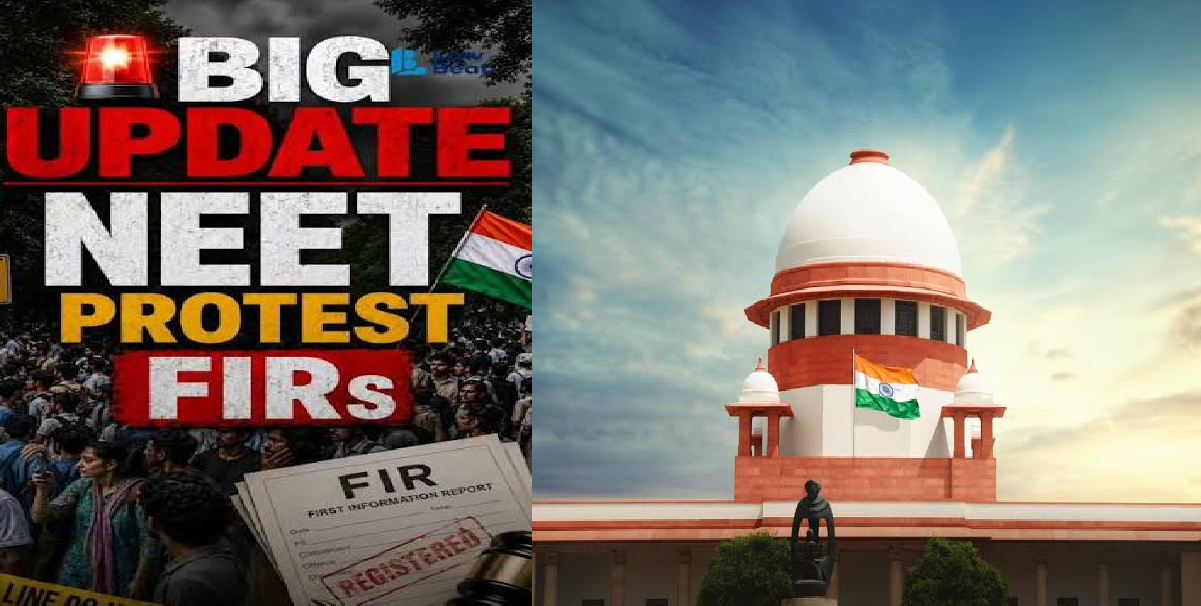
New Delhi, September 1, 2026: In a major development concerning the protests over the alleged NEET-UG paper leak, the Supreme Court on Tuesday invoked its extraordinary powers under Article 142 of the Constitution to quash FIRs registered against students and other protesters who participated in demonstrations held across the country.
A bench headed by Chief Justice of India Surya Kant, along with Justices Joymalya Bagchi and V. Mohana, said the decision was taken keeping in mind the future of young protesters who had participated in the demonstrations in good faith. The Court also made it clear that mere participation in a protest should not result in criminal consequences for students.
FIRs Quashed Across Several States
The cases were linked to protests held between July 20 and 25 over the NEET-UG paper leak controversy. The demonstrations took place in Delhi and several other states, with protesters demanding accountability over the examination controversy.
The Supreme Court accepted requests from the Centre, Delhi Police and governments of several states to close the FIRs. The order provides significant relief to students who faced criminal cases in connection with their participation in the protests.
Article 142 Invoked for Students’ Future
The Court exercised its special powers under Article 142, which enables the Supreme Court to pass orders necessary to ensure complete justice. The bench stressed that the relief was being granted in view of the circumstances of the case and the future of young protesters.
However, the Court’s order does not provide blanket protection to people accused of serious criminal conduct.
Police Allowed to Act Against Serious Offenders
While FIRs against bona fide protesters have been quashed, authorities have been permitted to proceed against individuals with serious criminal antecedents. In Delhi, police have been allowed to pursue cases involving 2,873 people identified in connection with the Jantar Mantar protests, according to reports.
The distinction means that students who merely participated in demonstrations receive relief, while those accused of serious violence or other grave offences can still face legal proceedings.
Relief for NEET Protesters
The Supreme Court’s decision marks a significant development in the legal battle surrounding the NEET-UG protests. Earlier proceedings had already directed authorities to exercise caution while dealing with student protesters and had distinguished ordinary participants from those with serious criminal backgrounds.
The latest order effectively closes the FIRs covered by the Court’s decision, giving thousands of young protesters relief from the possibility of prolonged criminal proceedings.
The ruling also highlights the Court’s attempt to balance the right to peaceful protest with the need to hold individuals accused of serious criminal acts accountable.
The development comes amid continuing debate over the NEET-UG examination controversy, with students and activists demanding stronger safeguards and accountability in the examination system.