
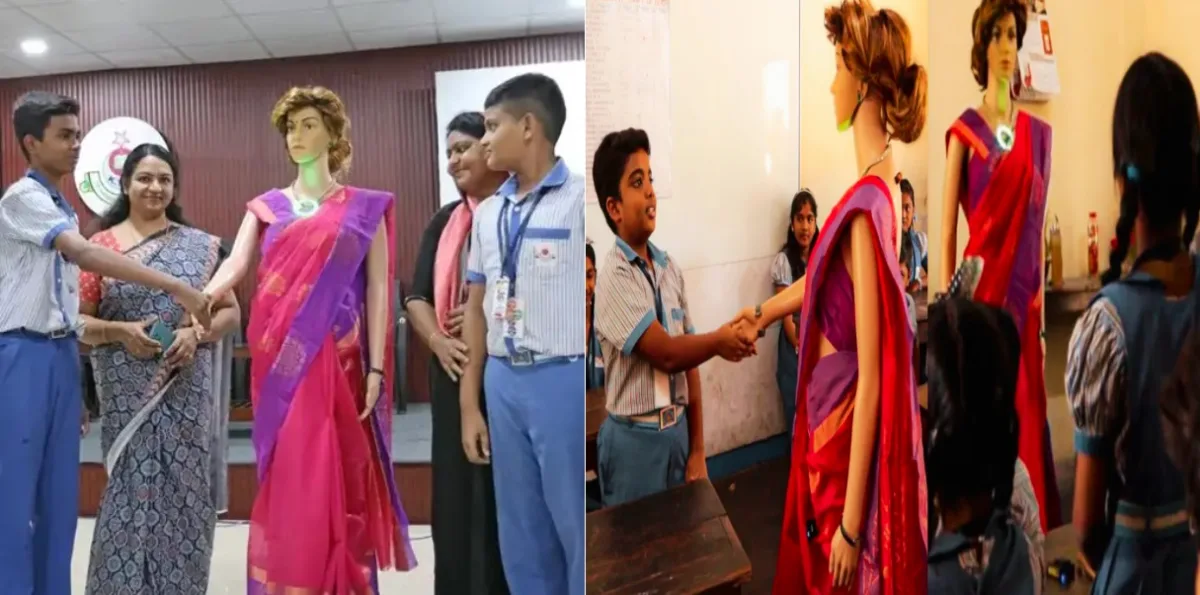
Introducing Iris: Kerala’s Groundbreaking Leap with India’s First AI Teacher
In a groundbreaking move, a school in Kerala’s Thiruvananthapuram has introduced India’s first AI teacher named Iris, marking a significant leap in the field of education.
Created by Maker Labs, Iris, which is equipped with an Intel processor, is a generative AI robot designed to transform the learning experience by offering personalized education.
According to multiple media reports, This AI teacher can move, interact, and answer questions, covering subjects from nursery to Class 12 in three languages: English, Hindi, and Malayalam, with plans to expand to over 20 languages.
What’s even more impressive is Iris’s ability to keep students so engaged that classes taken by it have seen zero absences. Beyond just teaching,
Iris is equipped to block inappropriate content, ensuring a safe learning environment.
Launched at KTCT Higher Secondary School and inaugurated by Dr. K Rajeev of the Space Physics Laboratory, Iris has quickly become a beloved figure among students, promising a future where education is not just about learning but about interacting and growing with technology.
Education in India has taken a revolutionary step forward with the introduction of Iris, the country’s first AI teacher, in Thiruvananthapuram, Kerala. Iris marks a significant leap in the field of education, blending technology with traditional teaching methods to enhance learning outcomes and foster innovation in classrooms.
Introduction to Iris: India’s First AI Teacher
In a world increasingly driven by technological advancements, the integration of artificial intelligence in education comes as no surprise. Iris stands at the forefront of this revolution, designed to assist and supplement traditional teaching methods in classrooms.
The Significance of Iris in Education
Iris’s introduction symbolizes a shift towards personalized learning experiences tailored to individual student needs. By analyzing data and adapting to student progress, Iris aims to optimize the learning process, ensuring each student reaches their full potential.
How Iris Works: Understanding the Technology
Introducing Iris: Kerala’s Thiruvananthapuram Leads India’s Education Revolution with First AI Teacher. Utilizing advanced algorithms and machine learning techniques, Iris interacts with students through a user-friendly interface, providing real-time feedback and assistance. Its capabilities extend beyond traditional teaching methods, offering interactive lessons and personalized study plans.
Benefits of Integrating AI in Education
The integration of AI in education brings forth a multitude of benefits, including enhanced student engagement, improved learning outcomes, and the ability to cater to diverse learning styles. Iris empowers educators to focus on individual student needs, fostering a supportive and inclusive learning environment.
Addressing Concerns: AI vs. Human Teachers
While some may express concerns regarding the role of AI in education, it’s essential to recognize that Iris complements rather than replaces human teachers. By automating routine tasks and providing valuable insights, Iris allows educators to focus on what truly matters: fostering critical thinking and creativity in students.
Iris’s Impact on Learning Outcomes
Early indicators suggest that Iris has a profound impact on learning outcomes, with students exhibiting increased motivation and comprehension levels. By leveraging AI technology, educators can identify areas for improvement and tailor instruction accordingly, maximizing student success.
Implementation Challenges and Solutions
The implementation of AI in education is not without its challenges, including infrastructure limitations and resistance to change. However, with proper training and support, educators can overcome these hurdles, harnessing the full potential of Iris to create dynamic and engaging learning experiences.
Future Implications of AI in Education
As AI continues to evolve, its role in education will undoubtedly expand, offering new opportunities for innovation and collaboration. From personalized tutoring to adaptive learning platforms, the future of education with Iris holds limitless possibilities.
Public Perception and Acceptance of Iris
Public perception plays a crucial role in the adoption of AI technology in education. By fostering transparency and addressing concerns, stakeholders can build trust and confidence in Iris, paving the way for widespread acceptance and integration.
Support and Training for Educators
To fully leverage the capabilities of Iris, educators require comprehensive training and ongoing support. By investing in professional development programs, educational institutions can equip teachers with the skills and knowledge needed to integrate AI seamlessly into their classrooms.
Ethical Considerations in AI Education
Ethical considerations are paramount in the development and implementation of AI in education. Safeguarding student privacy and promoting equity and accessibility are essential principles that must guide the use of Iris and similar technologies.
Success Stories and Testimonials
Numerous success stories highlight the transformative impact of Iris on students’ academic performance and engagement. From accelerated learning to improved retention rates, Iris has garnered praise from educators, parents, and students alike.
Collaborative Learning with Iris
Iris fosters a culture of collaborative learning, encouraging students to engage with peers and explore new concepts together. By facilitating group discussions and collaborative projects, Iris promotes teamwork and communication skills essential for success in the 21st century.
The Road Ahead: Scaling Iris’s Reach
As Iris continues to evolve and expand its capabilities, efforts must be made to scale its reach and accessibility. By partnering with educational institutions and government agencies, Iris can reach a broader audience, bridging gaps in education and empowering students across India.
Conclusion: Embracing the Future of Education with Iris
In conclusion, Iris represents a transformative force in education, bridging the gap between tradition and innovation. By harnessing the power of AI, educators can create dynamic and personalized learning experiences that inspire and empower students to succeed in an ever-changing world.
Unique FAQs:
- How does Iris differ from traditional teaching methods?
- Is Iris capable of adapting to individual student needs?
- What measures are in place to ensure student privacy and data security?
- How can educators integrate Iris into their existing curriculum?
- What role does human interaction play in the learning process with Iris?