
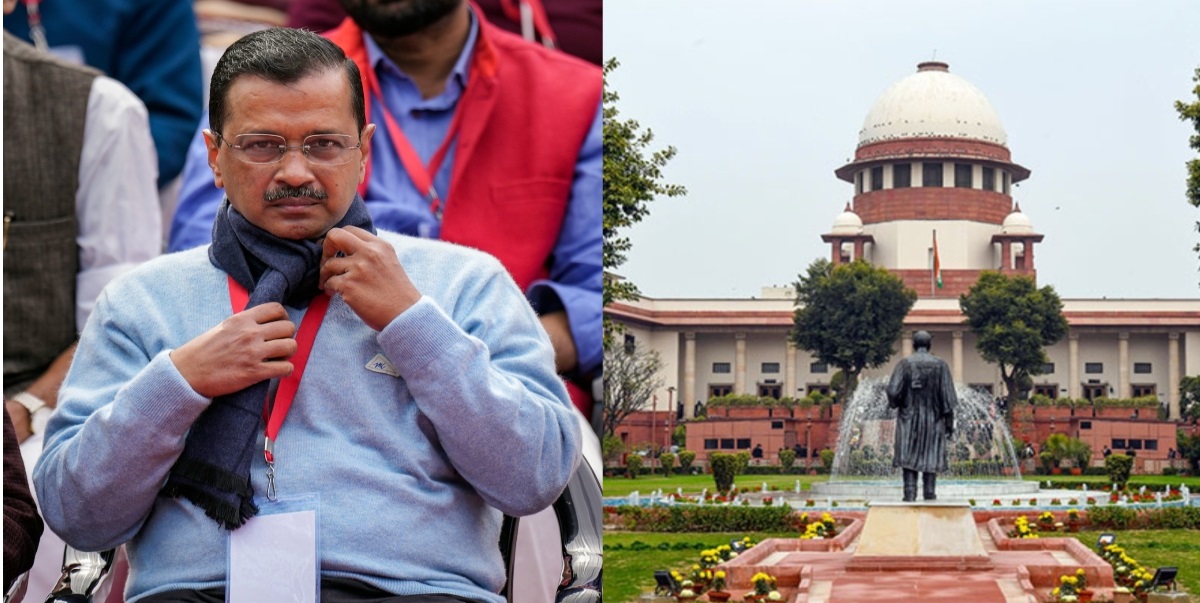
Supreme Court Contemplates Interim Bail for Arvind Kejriwal Amid Election Hustle
In a surprising turn of events, the Supreme Court of India finds itself at the epicenter of a legal and political storm as it deliberates on the possibility of granting interim bail to Arvind Kejriwal, the Chief Minister of Delhi. The timing of this decision couldn’t be more critical, as it comes amidst the frenetic hustle and bustle of election season, where every move is scrutinized under the glaring spotlight of public and political scrutiny.
Arvind Kejriwal, the firebrand leader known for his anti-corruption crusades and unconventional approach to politics, has found himself entangled in a legal quagmire. Facing charges in multiple defamation cases filed against him, Kejriwal’s legal battles have been a recurrent theme in his political career. However, the current scenario presents a unique conundrum, with the looming specter of elections casting a long shadow over the judicial proceedings.
The Supreme Court’s contemplation of granting interim bail to Kejriwal raises a myriad of questions, both legal and ethical. On one hand, there’s the fundamental principle of justice, which dictates that individuals should be presumed innocent until proven guilty. Granting interim bail would allow Kejriwal to continue his political activities unhindered, ensuring that the electoral process remains fair and democratic. It would also prevent any potential disruption to governance in the crucial period leading up to the elections.
However, the decision isn’t devoid of its complexities and challenges. The very act of considering interim bail for a high-profile politician like Kejriwal inevitably invites accusations of preferential treatment or political bias. Critics may argue that the judiciary is being swayed by extraneous factors, compromising its impartiality and integrity. Moreover, granting bail could set a precedent that may be exploited by other politicians facing similar legal predicaments, potentially undermining the authority of the judiciary in the long run.
At the heart of the matter lies the delicate balance between the rule of law and the exigencies of politics. The Supreme Court, tasked with upholding the Constitution and safeguarding the rights of citizens, finds itself navigating through uncharted waters where legal principles intersect with political realities. The decision it ultimately reaches will not only have far-reaching implications for Arvind Kejriwal but will also serve as a litmus test for the judiciary’s independence and resilience in the face of external pressures.
Beyond the legal intricacies, the case of Arvind Kejriwal underscores broader issues pertaining to the intersection of law, politics, and governance in India. It brings into focus the need for robust mechanisms to ensure accountability and transparency in the conduct of public officials, while also safeguarding their rights and liberties against any potential abuse of power. Moreover, it highlights the imperative of a vigilant and discerning citizenry that remains vigilant in holding its leaders accountable, irrespective of their political affiliations.
As the Supreme Court deliberates on the fate of Arvind Kejriwal, the nation watches with bated breath, cognizant of the profound implications of its decision. In a democracy, where the rule of law is sacrosanct, every judicial pronouncement carries weight, shaping the contours of the political landscape and defining the collective destiny of a nation. It is a reminder that, in the words of Justice Oliver Wendell Holmes, Jr., “The life of the law has not been logic; it has been experience.” And in this unfolding drama of law and politics, the Supreme Court stands as the ultimate arbiter, tasked with the solemn duty of dispensing justice, untainted by the vagaries of electoral fervor or partisan fervor.