
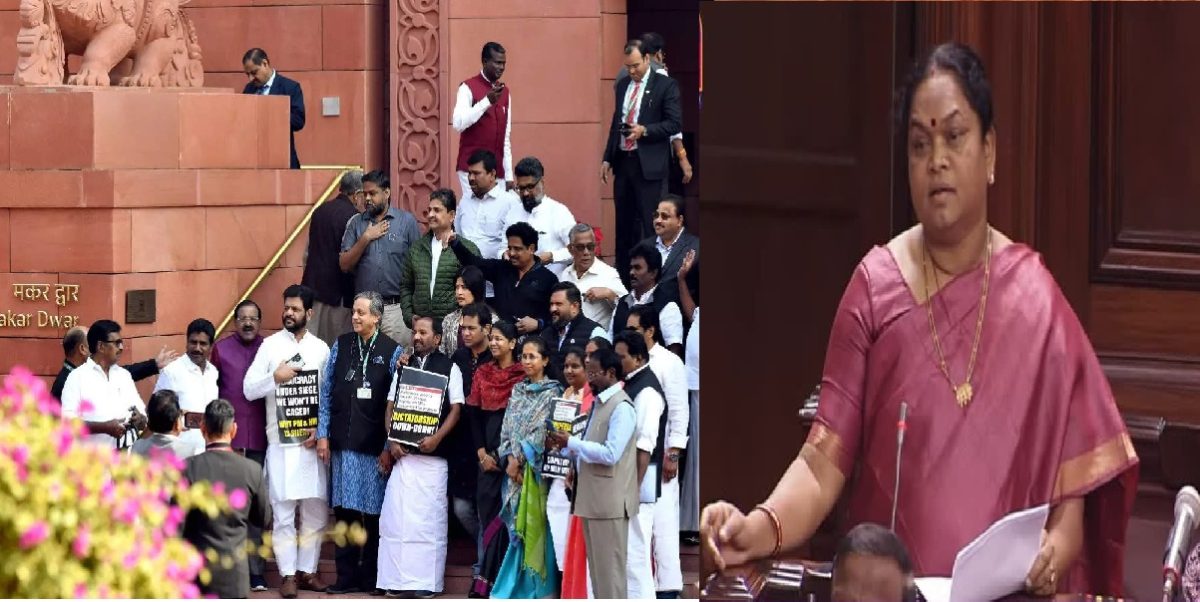
In a dramatic turn of events during a protest in the Rajya Sabha, Congress MP Phulo Devi Netam was hospitalized after collapsing. The incident occurred while she was actively participating in a demonstration against the National Eligibility cum Entrance Test (NEET), highlighting the intense emotions and fervent opposition surrounding this contentious issue.
Phulo Devi Netam, a Rajya Sabha MP from Chhattisgarh, joined her fellow Congress members in the Well of the House to voice their concerns and demands regarding the NEET examination. The opposition has been critical of the NEET system, arguing that it disproportionately disadvantages students from rural areas and those who come from non-English medium schools. They contend that the exam’s uniform structure fails to account for the diverse educational backgrounds of students across India.
The protest in the Rajya Sabha was part of a broader campaign by the Congress party to pressure the government into re-evaluating the NEET framework. As the session progressed, the intensity of the protest increased. MPs raised slogans, waved placards, and demanded immediate attention to their grievances.
Devi Netam began to feel unwell. Witnesses reported seeing her looking visibly dizzy and struggling to maintain her balance. Moments later, she collapsed in the Well of the House, causing immediate concern among her colleagues and prompting swift action.
Parliamentary staff and fellow MPs rushed to her aid, and an ambulance was quickly called to the scene. Netam was then transported to Dr. Ram Manohar Lohia (RML) Hospital for medical evaluation and treatment. The incident temporarily halted the proceedings in the Rajya Sabha, underscoring the serious nature of her condition and the urgency of the situation.
This incident sheds light on the physical toll that high-stress political activism can take on public representatives. Protesting in the Well of the House is a measure of last resort, reflecting the depth of frustration and urgency that the opposition feels regarding the NEET issue. For many MPs, the stakes are personal and political, as they advocate for the interests of their constituents who feel marginalized by the current system.
The Congress party issued a statement expressing their solidarity with Netam and reaffirming their commitment to the cause she was championing. “We stand with Phulo Devi Netam and all students who are disadvantaged by the NEET system. This incident only strengthens our resolve to fight for a fair and just educational framework that accommodates the diversity of our nation,” the statement read.
Reactions to the incident were swift and varied. Supporters of the NEET system argued that the standardized exam is necessary to maintain a uniform standard of medical education across the country. They contend that any changes to the system should focus on improving access and resources for disadvantaged students rather than dismantling the exam itself.
Conversely, critics of NEET reiterated their stance that the exam perpetuates inequality and fails to account for the vast disparities in educational infrastructure across different regions. They argue that a one-size-fits-all approach to medical admissions is inherently flawed and that a more nuanced, inclusive system is needed to ensure fair access to medical education for all students.
As Phulo Devi Netam received medical care, the broader debate over NEET continued to rage on both within and outside the halls of Parliament. Her collapse became a symbol of the intense pressure and emotional strain that many public figures endure as they advocate for their beliefs and the interests of their constituents.
In conclusion, the hospitalization of Congress MP Phulo Devi Netam during a NEET protest in the Rajya Sabha serves as a stark reminder of the human cost of political activism. It highlights the deep divisions and passionate arguments that characterize the ongoing debate over educational equity in India. As the nation watches and waits for updates on Netam’s condition, the discussion about NEET and its impact on students is likely to remain at the forefront of public discourse, demanding thoughtful consideration and meaningful action from policymakers