
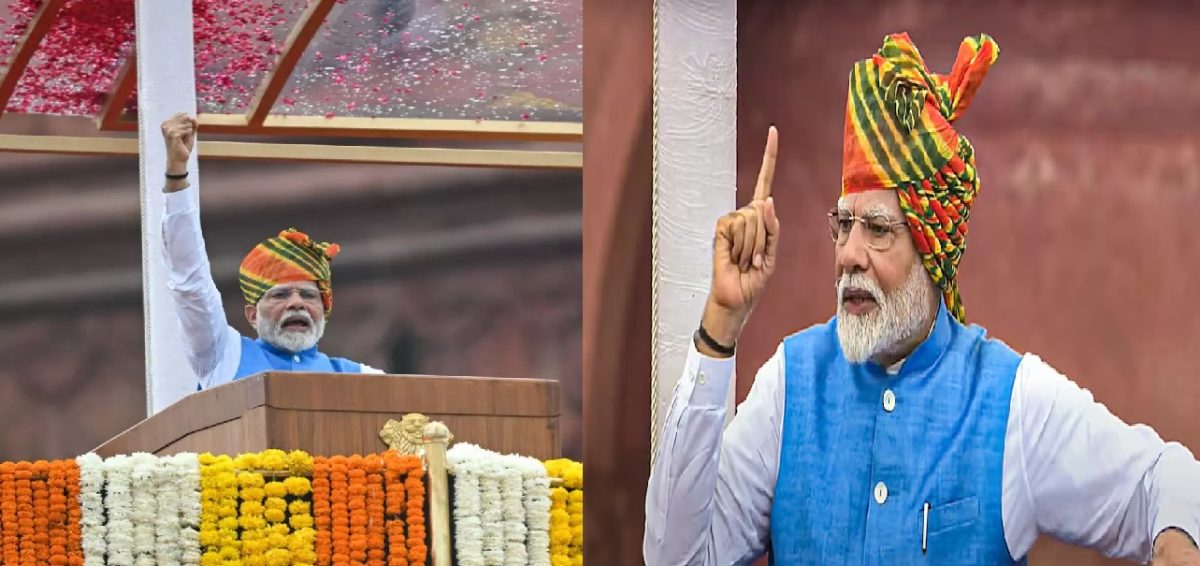
In a landmark Independence Day speech, Indian Prime Minister Narendra Modi has called for the implementation of a secular civil code, emphasizing it as a critical and timely reform for the country. Speaking from the Red Fort in Delhi, Modi’s address touched on various national issues but was particularly notable for its strong endorsement of a unified legal framework that transcends religious boundaries.
The Prime Minister’s advocacy for a secular civil code comes amid ongoing debates about personal laws in India, which are currently governed by a patchwork of regulations based on religious communities. This fragmentation, Modi argued, has led to discrepancies in the legal treatment of individuals, affecting issues such as marriage, divorce, inheritance, and adoption. By proposing a uniform civil code, Modi envisions a system where all citizens, irrespective of their religion, would be governed by the same set of laws, ensuring fairness and equality.
In his speech, Modi framed the call for a secular civil code within the broader context of national unity and progress. He highlighted that India’s diversity, while a strength, should not result in disparate legal standards that can lead to inequality and social discord. “A secular civil code is not just a legal necessity but a moral imperative,” he stated. “It is a step towards ensuring that every citizen of our great nation is treated equally under the law.”
The Prime Minister’s position resonates with his broader vision of a modern, inclusive India where outdated practices are replaced with progressive reforms. Modi emphasized that such changes are crucial for fostering a more equitable society. His call for a unified civil code reflects a broader push towards modernization, aiming to streamline legal processes and promote a sense of common citizenship.
The proposal has received mixed reactions. Supporters argue that a secular civil code is essential for upholding the principles of justice and equality enshrined in the Indian Constitution. They believe it would simplify legal processes and reduce the complexities associated with multiple personal laws. Critics, however, caution that such a move could be perceived as an infringement on religious freedoms and may face resistance from various communities who view their personal laws as integral to their identity.
Modi’s address also touched upon other significant themes, including economic growth, infrastructure development, and social welfare. However, the focus on the secular civil code marked a notable shift in the discourse, potentially setting the stage for legislative action in the near future. The Prime Minister’s remarks reflect his administration’s willingness to tackle contentious issues head-on, positioning the civil code as a cornerstone of his vision for India’s future.
In the context of ongoing political debates, Modi’s call for a secular civil code is likely to be a focal point in discussions about legal and social reforms. It aligns with his broader agenda of national integration and modernization, seeking to address disparities and promote uniformity in the legal system. The move is anticipated to ignite further debate and discussions across the political spectrum and among civil society groups.
As India reflects on its journey since independence, Modi’s speech underscores the ongoing quest for a more unified and equitable society. The proposal for a secular civil code represents a significant shift towards a more cohesive legal framework, aiming to harmonize personal laws and reinforce the principles of equality and justice in the nation.