
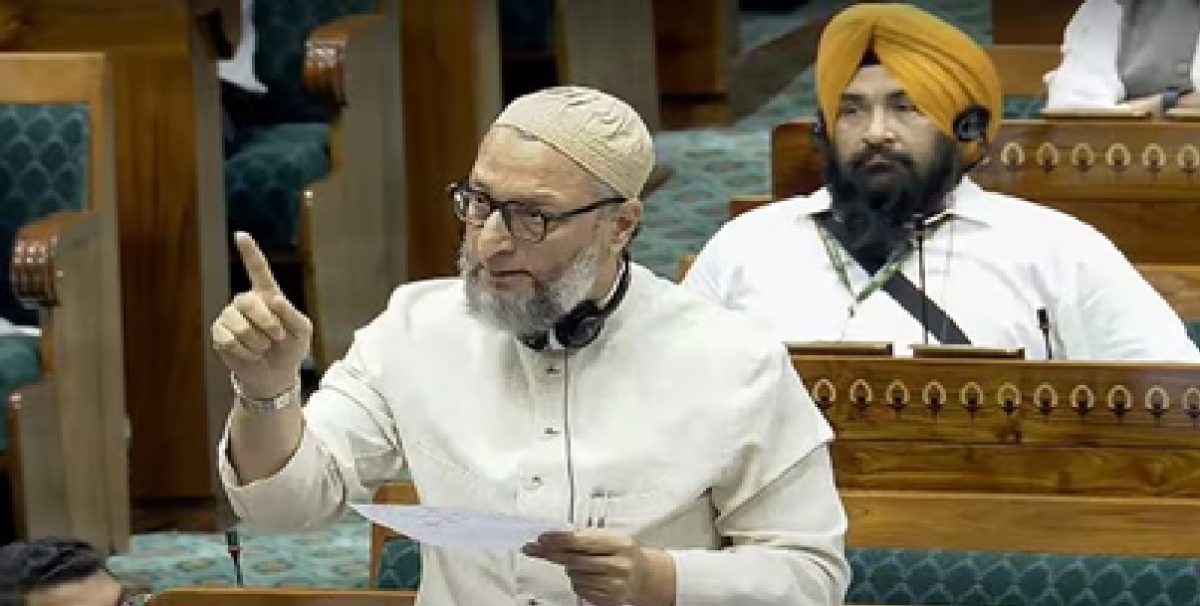
During a contentious debate in the Indian Parliament on the Waqf Bill, Asaduddin Owaisi, a prominent leader of the All India Majlis-e-Ittehad-ul-Muslimeen (AIMIM), made a striking and highly symbolic statement: “Like Mahatma Gandhi, I tear this bill.” This bold declaration, made in opposition to the Waqf Bill, reflected Owaisi’s strong resistance to what he saw as a piece of legislation that could potentially undermine the rights of the Muslim community and compromise the autonomy of Waqf institutions.
The Waqf Bill aims to regulate the administration and management of Waqf properties in India. These properties are held in trust for religious and charitable purposes under Islamic law. The bill was introduced with the intention of improving the governance of these properties, ensuring they are used for their intended purposes, and preventing corruption or mismanagement. Proponents of the bill argue that it is necessary to bring transparency, efficiency, and accountability to the administration of Waqf assets, which are often seen as poorly managed and subject to misuse.
However, critics like Owaisi contend that the bill goes too far in granting the government and its agencies greater control over Waqf properties, potentially infringing upon the autonomy of religious institutions. Owaisi’s objection to the bill was rooted in his belief that it undermined the independence of the Waqf boards and would allow undue interference in religious affairs. His statement, invoking Mahatma Gandhi’s legacy, was a powerful way to draw attention to his concerns and signal his firm opposition to what he perceived as an unjust law.
Owaisi’s reference to Gandhi’s iconic act of protest—the Salt March in 1930—was not just a rhetorical flourish; it was a deliberate and calculated comparison. Gandhi’s act of tearing the salt tax laws was a symbol of non-violent resistance to British colonial rule, a defiant gesture that sought to reclaim autonomy for the people of India. By comparing his action to Gandhi’s, Owaisi was positioning himself as a defender of the rights of religious communities, particularly Muslims, against what he saw as an overreach by the government.
The symbolism of tearing the bill was also meant to emphasize the gravity of Owaisi’s opposition. It was a powerful visual expression of his rejection of the legislation, reminiscent of the way Gandhi tore apart the symbols of British oppression. Owaisi was not just rejecting a bill; he was rejecting what he saw as a broader attempt to erode the rights and self-governance of Muslim institutions in India.
His words sparked intense debate, with supporters of the bill accusing him of politicizing the issue, while his followers and critics of the bill applauded his stance as one of principled resistance. Owaisi’s move highlighted the deep divisions within Indian politics over religious autonomy, the role of the state in managing religious institutions, and the rights of minority communities.
In conclusion, Owaisi’s statement during the Waqf Bill debate was much more than just a rhetorical gesture; it was a calculated political move designed to challenge the bill’s provisions and to frame the debate as a struggle for the protection of Muslim religious rights and autonomy. By invoking the spirit of Mahatma Gandhi, he sought to elevate the debate to a moral plane, positioning himself as a defender of justice and equality in the face of what he viewed as an unjust piece of legislation.