
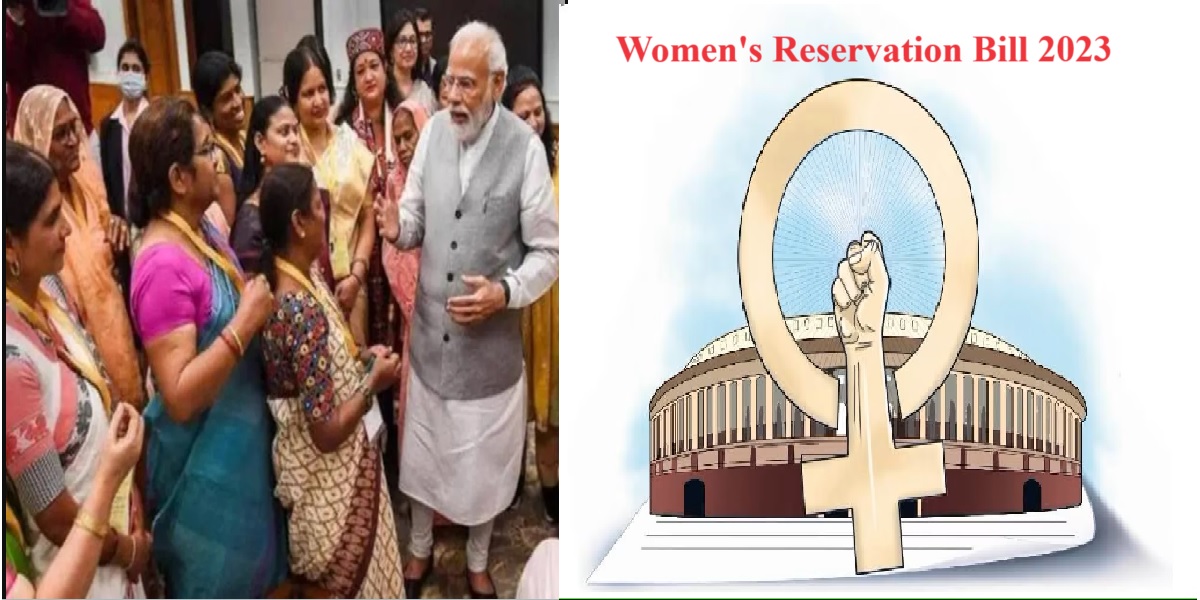
The bill providing 33% reservation to women has been approved in the Parliament and State Assemblies. You are going to get all the information about what is written in the women’s reservation.
In a nation as diverse as India, where tradition and modernity often coexist, the Women’s Reservation Bill 2023 marks a significant step towards achieving gender equality and empowering women in various spheres of life. This bill, if enacted into law, has the potential to bring about a transformative change in the Indian socio-political landscape.
Understanding the Women’s Reservation Bill
The Women’s Reservation Bill, also known as the Constitution (One Hundred and Twenty-Seventh Amendment) Bill, was first introduced in the Indian Parliament in 1996. Its primary objective is to reserve one-third of the total seats in the Lok Sabha (the lower house of India’s Parliament) and state legislative assemblies for women. The bill aims to provide women with equal opportunities to participate in the nation’s decision-making processes.
128th proposal of Samvidhan amendment
In fact, the fifth provision of the Bill says, ‘After Article 334 of the Constitution, this article will be added – 334A (1). Notwithstanding anything contained in the foregoing provisions of this Part or Part VIII, the provisions of this Constitution relating to the reservation of seats for women in the House of the People, the Legislative Assembly of a State, and the Legislative Assembly of the National Capital Territory of Delhi, shall, for this purpose, apply to the extent that they will be implemented after departure. Women’s reservation will come into force after the publication of the relevant data of the first census to be held after the commencement of the Constitution (128th Amendment) Act, 2023 and will cease on the expiry of the period of fifteen years.’
This book by Sonia Gandhi says that this dream was the dream of Rajiv Gandhi. Asaduddin Owaisi said about this bill that Muslim women are treated separately. Let us tell you that women are getting reservations in 198 countries around the world. Let us tell you that women are getting reservations in 198 countries around the world, so why can India lag behind in this? That is why India has given women a chance to come forward. Yesterday, on the day of Ganesh Chaturdashi, this bill was passed by Prime Minister Narendra Modi. Gaya women believe that “if Modi is there, then it is possible.”
The Need for Gender Parity
The importance of such legislation cannot be overstated. India, despite its rapid progress in various fields, still faces significant gender disparities. Women continue to be underrepresented in political and legislative bodies, which hinders their ability to influence policies and advocate for issues that directly affect them. The Women’s Reservation Bill seeks to address this imbalance by ensuring that women have a substantial presence in decision-making bodies.
Empowering Women in Politics
One of the most significant advantages of the Women’s Reservation Bill is that it will encourage more women to actively participate in politics. As women occupy a higher number of seats in legislative bodies, it will inspire others to join politics, thereby diversifying the perspectives and ideas that shape our nation’s policies.
Breaking Stereotypes and Challenging Norms
This bill is not just about increasing the number of women in politics; it’s about challenging stereotypes and changing societal norms. It sends a powerful message that women are equally capable of leading and governing. It breaks down the barriers that have historically kept women away from decision-making roles.
Ensuring Inclusivity
Critics of the bill argue that it may lead to tokenism or the selection of women with limited political experience. However, it is essential to note that the bill does not specify which women should be elected but rather reserves seats for them. It is up to political parties to nominate qualified and competent female candidates. This ensures that women from diverse backgrounds and experiences have the opportunity to represent their constituencies.
The Women’s Reservation Bill 2023 represents a crucial step towards a more inclusive and equitable society in India. It acknowledges the importance of women’s voices in shaping the nation’s future. By promoting gender parity in politics, this bill can lead to more comprehensive and balanced policies that benefit all segments of society.
As we move forward, it is essential to support this progressive legislation and create an environment where women can thrive in the political arena. The Women’s Reservation Bill is not just a legal document; it is a testament to the evolving mindset of a nation that is ready for change.