
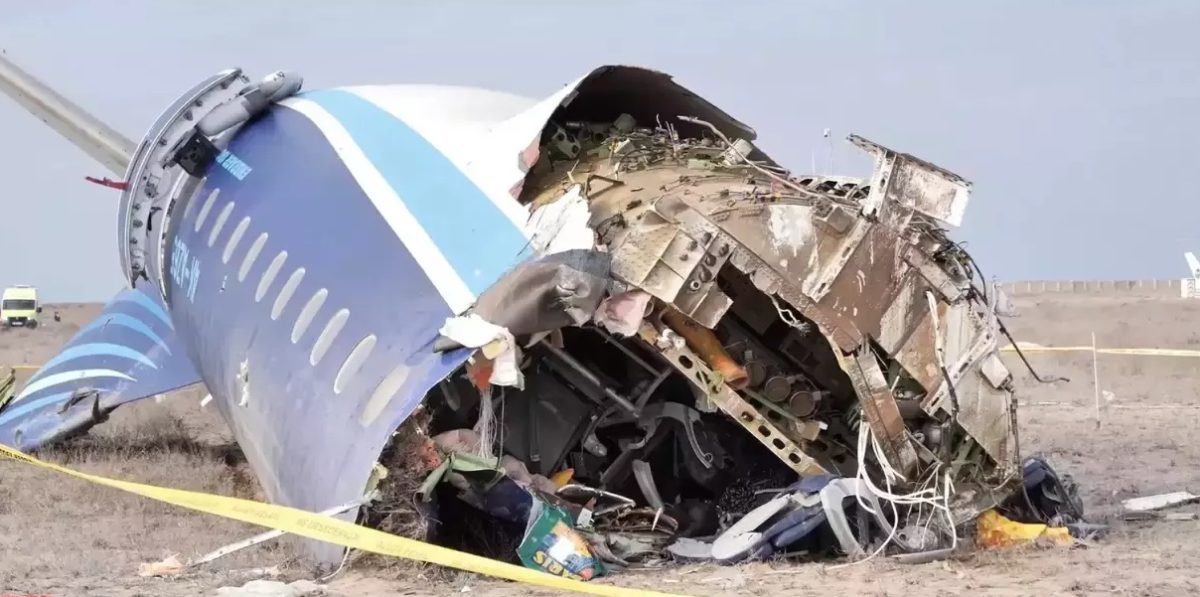
In a significant development, Russia has admitted its responsibility for the tragic plane crash in Kazakhstan, which resulted in the loss of several lives. Russian President Vladimir Putin formally apologized for the incident, acknowledging that it occurred during Russian defense operations in Ukraine. The tragic accident, which involved a civilian airliner, has raised several questions about the safety of air traffic in conflict zones and the broader implications of military engagements on civilian infrastructure.
The crash took place under highly complex circumstances. According to official reports, the Russian air defense systems were responding to attacks launched by Ukraine when the incident occurred. The airliner, which was en route to Kazakhstan, was caught in the crossfire. The confusion and the high-stakes environment of the ongoing conflict in Ukraine, combined with the intensity of Russia’s military response, led to the misidentification of the aircraft. As a result, the plane was mistakenly targeted by Russian air defenses, causing it to crash.
The admission of fault by the Russian government marks a rare moment of accountability in an international tragedy. President Putin’s statement, which included a public apology to the government and citizens of Kazakhstan, emphasized the “unfortunate chain of events” that led to the incident. Putin described the situation as “an error” during an otherwise intense military operation. His comments came after a direct intervention by Azerbaijani President Ilham Aliyev, who communicated to Putin that the plane’s destruction had resulted from a mistake in the heat of ongoing military action.
The crash has left both Kazakhstan and the international community grappling with questions about the safety protocols for civilian aircraft flying near conflict zones. The situation highlights the dangers faced by airliners operating in regions of heightened military activity and the potential risks posed by sophisticated air defense systems in such areas. Many experts are calling for clearer regulations and systems to prevent such tragic events from occurring in the future, including more effective communication channels between military forces and civilian aviation authorities.
In his apology, Putin extended his condolences to the families of the victims and expressed Russia’s commitment to investigating the incident thoroughly. He also indicated that Russia would take steps to ensure that such mistakes would not be repeated in the future. The Russian government has promised to cooperate with international agencies to fully understand the cause of the crash and work towards improving air safety in conflict zones.
For Kazakhstan, the tragedy has been devastating. The country’s leadership has demanded a full investigation and called for stronger international cooperation to prevent such incidents. The crash has prompted global concerns about the escalation of the Russia-Ukraine war and its far-reaching effects on civilian life, even beyond the battlefield.
The crash also raises broader geopolitical implications. With Russia’s role in the ongoing Ukraine conflict being a source of intense international scrutiny, the incident is likely to impact relations between Russia and several other countries, including Kazakhstan, Azerbaijan, and others in the region. President Aliyev’s direct communication with Putin suggests a desire for diplomatic resolution, but it also highlights the delicate nature of regional politics in the context of the war.
As the investigation continues, the crash stands as a stark reminder of the unpredictable and often dangerous consequences of military operations in regions where civilian air traffic is prevalent. With Putin’s apology, there is an acknowledgment of the grave mistake made by Russia, but only time will tell whether this gesture will be enough to restore confidence in the safety of air travel in areas affected by conflict.