
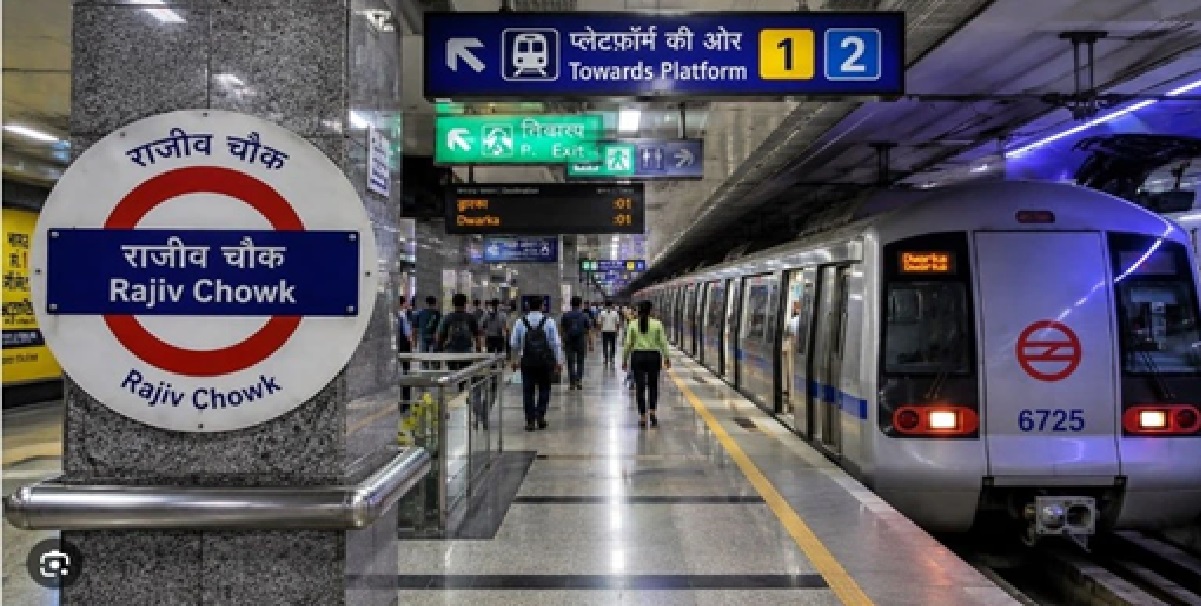
Delhi Metro reopens Rajiv Chowk, Mandi House and Secretariat stations, easing commuter rush and signaling revival of city’s transport network
New Delhi, July 25, 2026 — After days of partial closures due to security and maintenance concerns, the Delhi Metro Rail Corporation (DMRC) has reopened three of its busiest stations — Rajiv Chowk, Mandi House, and Secretariat. The move has brought relief to thousands of commuters and is being seen as a major step in restoring normalcy to the capital’s transport network.
Commuter Relief
- Rajiv Chowk, one of the busiest interchange stations, had witnessed overcrowding and long queues during its closure.
- Mandi House, a cultural hub, and Secretariat, a key administrative stop, are vital for daily office-goers and students.
- With the reopening, passenger flow has eased significantly, reducing travel time and congestion across multiple metro lines.
DMRC Statement
Officials from DMRC stated that the reopening was possible after enhanced safety checks and infrastructure upgrades. They assured commuters that all necessary precautions have been taken to ensure smooth operations. The corporation emphasized that the closures were temporary and aimed at strengthening the metro’s resilience.
Public Response
- Commuters expressed relief on social media, calling the reopening a “return to normal life.”
- Students and office workers highlighted how the closures had disrupted schedules, forcing them to rely on buses and auto-rickshaws.
- The reopening has also boosted confidence in the city’s public transport system, which had faced criticism for sudden shutdowns.
Broader Impact
The reopening of these stations is being seen as a revival of Delhi’s transport network. With metro ridership forming the backbone of urban mobility, the move is expected to reduce road traffic and pollution. Analysts suggest that restoring full metro operations will also benefit local businesses, especially in Connaught Place and central Delhi.
Future Outlook
DMRC has announced plans to further modernize its network, including:
- Smart ticketing systems to reduce queues.
- AI-based crowd management to handle peak-hour rush.
- Expansion of feeder bus services to improve last-mile connectivity.
Conclusion
The reopening of Rajiv Chowk, Mandi House, and Secretariat stations marks a turning point for Delhi Metro and its commuters. It not only eases the immediate rush but also signals the revival of the city’s transport infrastructure, reinforcing Delhi’s reliance on metro services as the lifeline of urban mobility.