
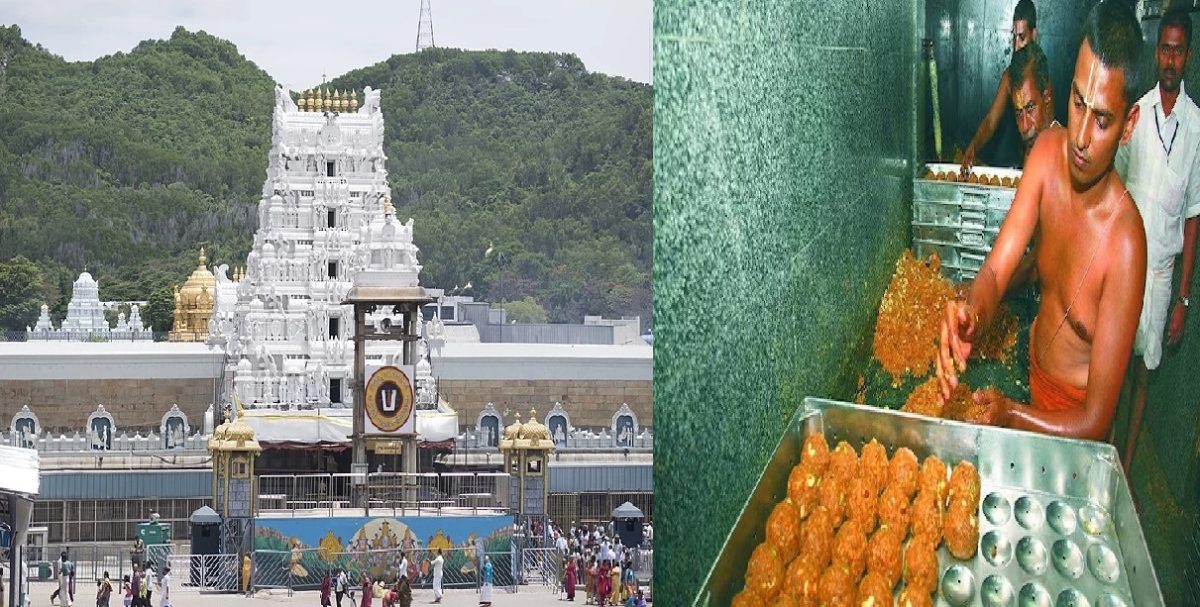
India’s diverse cultural and religious landscape often sees a blending of faith, tradition, and the law. One such conflict is brewing around the revered Tirupati Laddoo, a sacred offering made to the presiding deity of the Tirumala Venkateswara Temple in Andhra Pradesh. This seemingly innocuous sweet has now become the subject of a legal battle, drawing the attention of the Supreme Court. The case highlights broader questions of religious rights, cultural identity, and the commercialization of sacred traditions.
आतिशी का निर्णय: मार्लेना सरनेम का नाम क्यों किया गया हटाया? जानिए दिल्ली CM के पीछे की कहानी
The Tirupati Laddoo: More than a Sweet
The Tirupati Laddoo is no ordinary confectionery. For millions of devotees, it is a symbol of divine grace, blessed and distributed after rituals at the iconic Tirumala temple. The laddoo holds a Geographical Indication (GI) tag, ensuring its authenticity and uniqueness to the region. Produced by the Tirumala Tirupati Devasthanams (TTD), the laddoo is carefully made by temple cooks following centuries-old practices.
However, in recent years, the sale and distribution of the Tirupati Laddoo have expanded beyond the temple’s premises, raising concerns over its sanctity. The TTD has granted licenses to various outlets for the laddoo’s sale, allowing devotees unable to visit the temple to purchase it from authorized vendors. While this move was initially seen as a convenience, it sparked debates over the commercialization of religious offerings.
The Legal Battle Begins
The conflict began when certain individuals and groups raised concerns that selling laddoos in commercial outlets cheapens their religious value. They argued that the laddoo, being a sacred prasadam, should not be treated like a commercial product. The core of their argument revolves around religious sentiment and the infringement of sacred practices, claiming that mass production and sale dilute the spiritual significance of the offering.
Opposing this, the TTD argued that expanding the distribution of the laddoo through licensed channels is a service to devotees. They contend that many devotees are unable to visit the temple due to health, distance, or other constraints. Providing the laddoo outside the temple premises is a way of extending the blessings of the deity to a larger section of the faithful. The TTD also asserts that it maintains strict control over the production and distribution of the laddoo, ensuring its sanctity remains intact.
आतिशी की प्रेस कांफ्रेंस: ‘दिल्ली का एक ही मुख्यमंत्री, अरविंद केजरीवाल
Supreme Court’s Role
The case reached the Supreme Court after petitions were filed questioning the legality and morality of selling the sacred laddoo outside the temple premises. The apex court’s involvement elevates the issue from a local religious dispute to one of national importance. The court is now tasked with navigating a complex intersection of law, religion, and cultural practices.
The larger debate revolves around the commercialization of religious symbols and offerings. Where does one draw the line between religious freedom and the commodification of sacred traditions? Can religious institutions expand the reach of their offerings without diluting their spiritual value? These are some of the questions the court will need to address.
Religious Rights in a Changing India
This case is part of a larger conversation about religious rights and the role of the judiciary in safeguarding them. In recent years, courts in India have been called upon to arbitrate various religious matters, from temple entry to the rights of women in religious spaces. The Supreme Court’s decision in the Tirupati Laddoo case will not only affect the future of the laddoo’s distribution but also set a precedent for how religious practices are regulated in India.
Market Watch: Anticipating Nifty 50 and Sensex Movements After the US Fed Rate Cut on September 19
As India modernizes and its population becomes increasingly diverse, the balance between tradition and progress will continue to challenge lawmakers and the judiciary. The battle over the Tirupati Laddoo is a symbolic clash between preserving sacred traditions and adapting to contemporary realities. Whatever the outcome, the case is sure to leave a lasting impact on the way religious rights are understood and protected in India.