
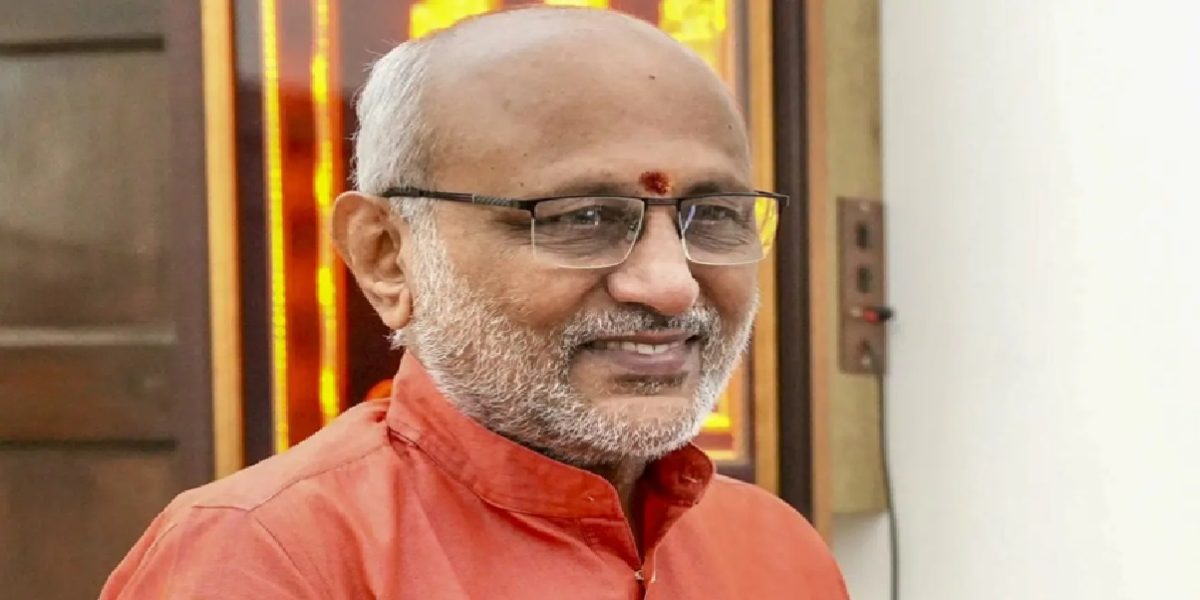
CP Radhakrishnan Wins 2025 Vice Presidential Election with 452 Votes Amid 98.2% Turnout from 767 Eligible Parliamentarians
In a decisive political development, CP Radhakrishnan, the National Democratic Alliance (NDA) candidate, has been elected as the 15th Vice President of India. The election, held on September 9, 2025, witnessed an impressive voter turnout of 98.2%, with 767 of the 781 eligible Members of Parliament casting their votes. Radhakrishnan secured a total of 452 votes, defeating the opposition-backed candidate, retired Justice B. Sudarshan Reddy, who garnered 300 votes. Fifteen votes were declared invalid.
This victory marks not only a personal milestone for Radhakrishnan but also a strong political signal from the NDA, showcasing its continued influence within the Parliament. His win, by a significant margin of 152 votes, underscores the ruling alliance’s grip on the legislative landscape and raises questions about the cohesion and strategy of the opposition bloc.
CP Radhakrishnan, a veteran leader from Tamil Nadu and a senior member of the Bharatiya Janata Party (BJP), brings with him decades of political experience. Known for his organizational skills and clean image, Radhakrishnan has served in various party and parliamentary roles. His elevation to the Vice Presidency is being viewed as a strategic move by the NDA to bolster its representation in southern India, while also rewarding a loyal and low-profile party stalwart.
The election process itself was conducted smoothly and witnessed one of the highest participation rates in recent years. Both houses of Parliament—Lok Sabha and Rajya Sabha—participated in the election, as is the norm for the Vice Presidential race. The Election Commission of India, which oversaw the process, lauded the conduct of the members and the orderly manner in which the election was held.
Justice (Retd.) B. Sudarshan Reddy, the opposition’s nominee, was widely respected for his judicial integrity and impartiality. His candidacy was an attempt by the opposition to project a non-political, constitutionally credible face for the high office. However, the outcome reflects the fragmented nature of opposition politics, with reports suggesting some instances of cross-voting and non-alignment within the bloc.
Political analysts believe that the results of this election may have a ripple effect on future opposition strategies. While the opposition attempted to present a united front, the results exposed a lack of consensus and coordination. This defeat could prompt a reassessment of leadership and strategy among the non-NDA parties ahead of the 2026 general elections.
As Vice President, Radhakrishnan will also serve as the ex-officio Chairman of the Rajya Sabha, India’s upper house of Parliament. His role will be critical in managing legislative business, especially in a politically charged environment where consensus is often elusive. Given his experience and temperament, expectations are high that he will bring a balanced, dignified approach to the role.
Radhakrishnan’s win is more than just a political victory—it’s a message of organizational strength, strategic foresight, and electoral discipline from the NDA, setting the tone for the next phase of Indian politics.