
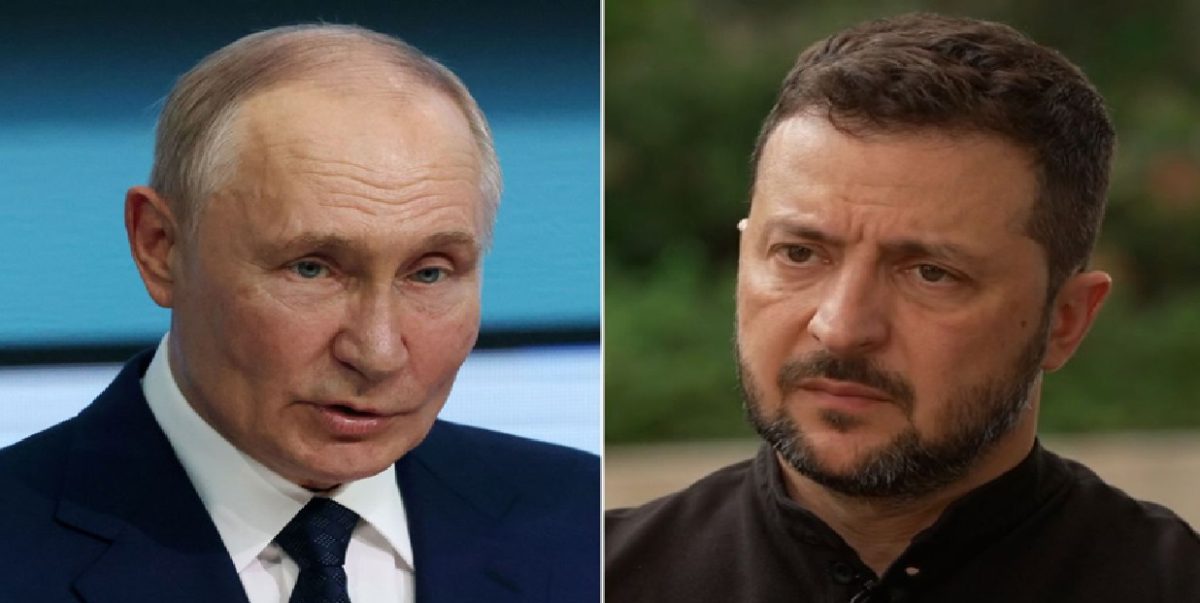
After Putin’s absence, Zelensky decided to send a delegation to Russia for talks
A new diplomatic initiative has emerged amid international tensions arising due to the Russia-Ukraine war. Ukrainian President Volodymyr Zelensky has indicated that he still wants to keep the channels of dialogue open. After the recent absence of Russian President Vladimir Putin from an important meeting, Zelensky has decided to send a special delegation for possible talks with Russia.
This decision comes at a time when the war has been going on for more than two years, and the military conflict between the two countries is not stopping. While on the one hand Ukraine is constantly receiving military and economic assistance from Western allies, on the other hand, the aggressive stance from Russia is still continuing.
Zelensky said in his statement, *”If there is any possibility of peace, we should try it. The path of dialogue is difficult, but much more humanitarian and practical than war.”*
Many speculations are being made about Putin’s recent absence. Some international analysts believe that Russia is currently busy on the strategic front and is not showing interest in talks. At the same time, some believe that Putin’s absence may be a deliberate political strategy to put psychological pressure on Ukraine.
The delegation sent by Ukraine includes senior diplomats and defense experts. This delegation will discuss issues such as a possible ceasefire, release of prisoners of war, and humanitarian aid corridors. The Zelensky government believes that if the peace process does not move forward through direct talks, then at least some agreement can be reached on humanitarian issues.
However, the Ukrainian opposition and some Western allies have questioned this decision. They say that Russia’s attitude so far has been very stubborn and it would be hasty to expect any concrete results. Despite this, Zelensky’s move shows that Ukraine still wants to give priority to dialogue instead of war.
The international community is also keeping an eye on this development. The United Nations, the European Union and the United States have welcomed this decision, but have also made it clear that Ukraine’s sovereignty and territorial integrity cannot be compromised in any agreement.
Now it will be interesting to see how Russia responds to this dialogue initiative. Will this be the beginning of a new peace chapter, or will this effort also get lost in the closed lanes of diplomacy?