
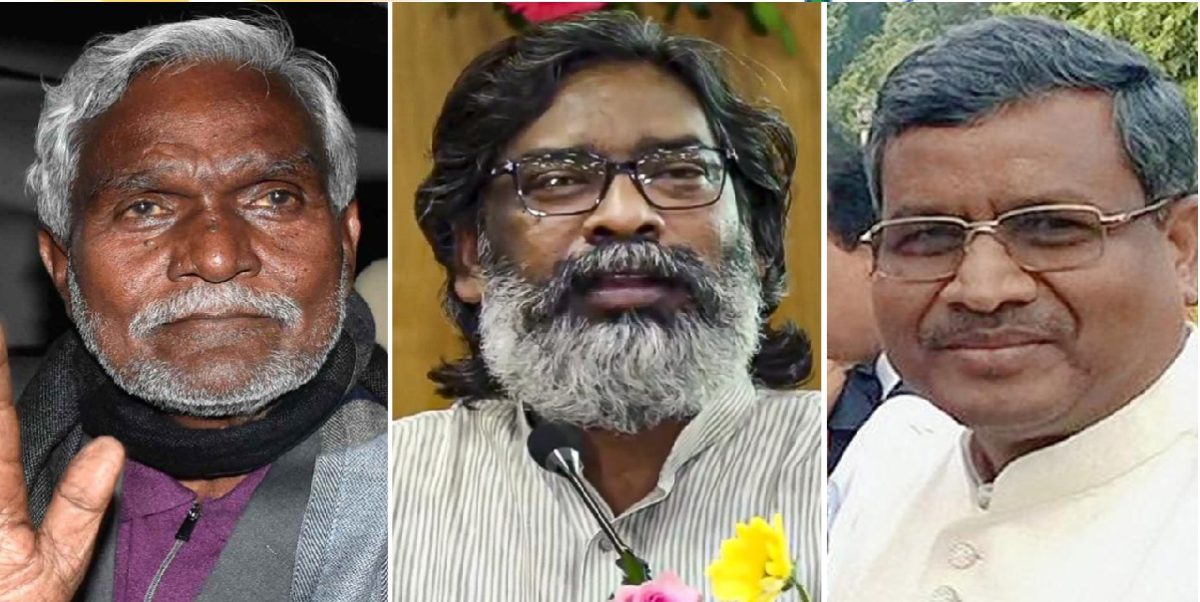
The 2024 Jharkhand Assembly election results have brought significant attention as the political landscape in the state continues to evolve. As the latest updates roll in, the Bharatiya Janata Party (BJP) is leading in 25 constituencies, while the ruling Jharkhand Mukti Morcha (JMM) holds a lead in 10 seats. The results, which reflect a tight race, are a clear indication of the changing dynamics in one of India’s mineral-rich states. These early trends suggest a shift in voter sentiment, with both national and regional parties vying for dominance.
The BJP’s strong showing in the initial results highlights its ability to make inroads in traditionally JMM-strong areas. The party, which has been focusing heavily on issues like development, security, and governance, appears to have gained substantial traction in rural and tribal areas. In the previous elections, the BJP had a considerable presence in Jharkhand, and it has continued its push in 2024, banking on its national appeal and leadership under Prime Minister Narendra Modi. With 25 seats showing leads, the BJP is poised to play a major role in the upcoming formation of the state government, even though it still lags behind the majority mark.
On the other hand, the JMM, led by Chief Minister Hemant Soren, is showing its strength in key constituencies, particularly in areas with a strong tribal population and those that have historically leaned in favor of regional parties. The JMM’s hold on 10 constituencies so far is reflective of its deep roots in Jharkhand’s political fabric, where it has positioned itself as a champion of local issues, especially tribal rights, social welfare, and regional autonomy. While it is trailing in overall seat count compared to the BJP, the party’s base remains strong, and its traditional support could still prove to be a decisive factor as the counting progresses.
As the results unfold, the Congress party, which has allied with the JMM in the state, is expected to play a role in determining the final outcome. Congress had been a key player in Jharkhand’s earlier coalitions, and while its individual performance in the elections has not been stellar so far, the alliance with JMM is crucial in terms of consolidating support in various regions. The combined strength of the JMM-Congress alliance could still provide a potential pathway to retaining power in the state, depending on how the remaining results develop.
Regional parties and independents are also making their presence felt, particularly in areas where local issues are paramount. Their performance could shift the balance between the BJP and JMM, with smaller parties often holding the key to forming a stable government in Jharkhand.
The ongoing results also suggest that voter turnout and election trends have reflected a mix of satisfaction and dissatisfaction with the current government. While the BJP’s lead in several constituencies indicates a strong opposition presence, the JMM’s resilient showing underlines the commitment to regional aspirations, which remains a powerful force in Jharkhand politics.
In conclusion, the Jharkhand 2024 election results are far from finalized, but the early trends of the BJP leading in 25 seats and the JMM ahead in 10 suggest a fierce contest. The alliance dynamics, regional issues, and voter sentiment will play a crucial role in shaping the final outcome. As counting progresses, both the BJP and JMM are gearing up for the next phase of political negotiations to secure the majority and form a government in the state.