
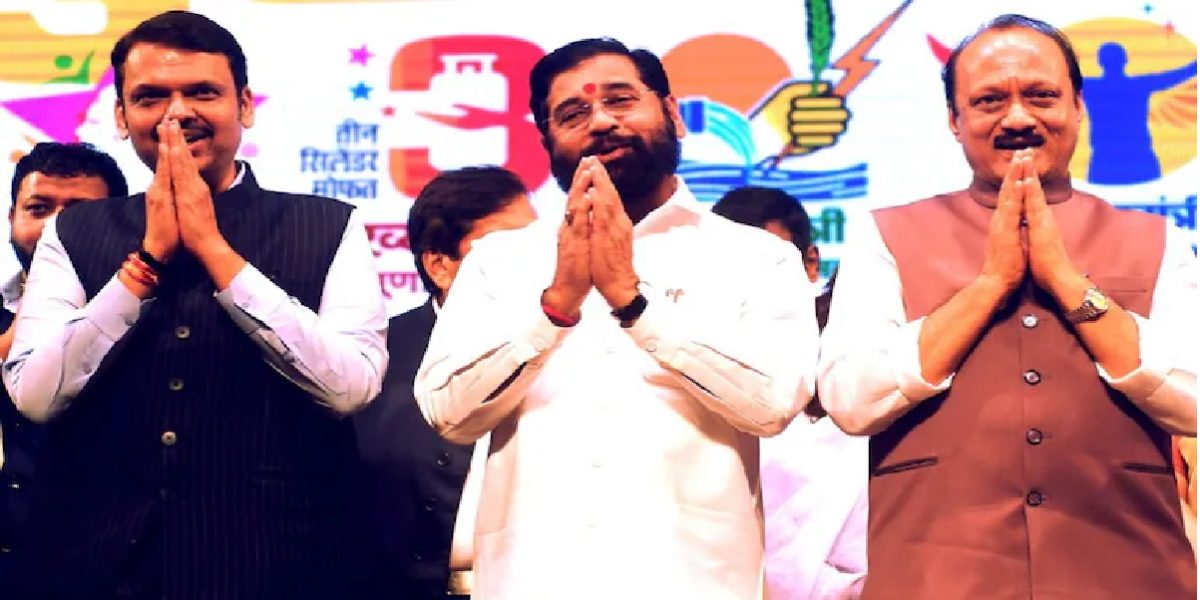
In a significant political development, the National Democratic Alliance (NDA) has surpassed the crucial 145-seat majority mark in Maharashtra’s 2024 Assembly elections, securing a decisive victory. The NDA’s triumph marks a clear and overwhelming mandate, while the Maharashtra Vikas Aghadi (MVA), the opposition alliance, has fallen far behind, securing a distant second position. This election outcome not only reshapes the state’s political landscape but also indicates a shift in voter sentiment, reflecting the growing confidence in the NDA’s leadership and policies.
The NDA’s success in Maharashtra is being hailed as a landmark achievement, as the alliance, which includes major players like the Bharatiya Janata Party (BJP) and Shiv Sena (Shinde faction), has managed to consolidate support across a wide range of constituencies. The alliance’s strategy of focusing on issues like infrastructure development, national security, and economic growth resonated strongly with the voters. Moreover, the leadership of prominent figures like Chief Minister Eknath Shinde and BJP’s Devendra Fadnavis played a pivotal role in rallying the electorate.
One of the key factors behind the NDA’s success is its ability to maintain a unified front despite challenges within the coalition. The Shiv Sena (Shinde faction), which split from the Uddhav Thackeray-led Shiv Sena faction in 2022, has managed to secure significant gains, particularly in the Konkan and Vidarbha regions, which were once considered strongholds of the MVA. The BJP, on the other hand, capitalized on its national presence and a strong organizational network to secure wins in urban and semi-urban constituencies.
In contrast, the MVA, which comprises the Shiv Sena (Uddhav Thackeray faction), Nationalist Congress Party (NCP), and Indian National Congress (INC), has struggled to connect with the electorate. The alliance, which was once considered a formidable force in Maharashtra politics, has seen its support base erode due to internal conflicts, leadership issues, and an inability to present a cohesive vision. The infighting within the MVA, particularly between the Thackeray faction and NCP, has hurt its prospects, with voters increasingly perceiving the alliance as fragmented and directionless.
The MVA’s poor showing in the 2024 elections highlights the growing disenchantment among voters with the opposition’s leadership. Many voters expressed frustration over the perceived lack of effective governance during the MVA’s tenure, especially in addressing key issues such as unemployment, agricultural distress, and inflation. Additionally, the controversies surrounding the Shiv Sena’s internal split and the shifting political alliances have further weakened the MVA’s appeal.
Another crucial aspect of the 2024 Maharashtra elections is the rise of new regional players, who have also chipped away at the traditional vote bank of both the NDA and MVA. These emerging parties have managed to secure pockets of influence in various districts, further complicating the electoral dynamics.
The NDA’s sweeping victory in Maharashtra sends a strong signal ahead of the 2024 General Elections, where the party is likely to continue to project its governance model as a benchmark for the nation. With the MVA in disarray and facing serious internal challenges, the NDA now appears to have firmly established its dominance in Maharashtra’s political landscape.
In conclusion, the NDA’s triumph in Maharashtra 2024 is a significant milestone that underscores the success of its political strategy, unity, and leadership. Meanwhile, the MVA’s poor performance raises critical questions about its future and the ability of opposition parties to effectively challenge the NDA’s dominance in the state. As Maharashtra moves forward, the election results suggest a clear political realignment that could have long-term implications for the state’s political landscape.