
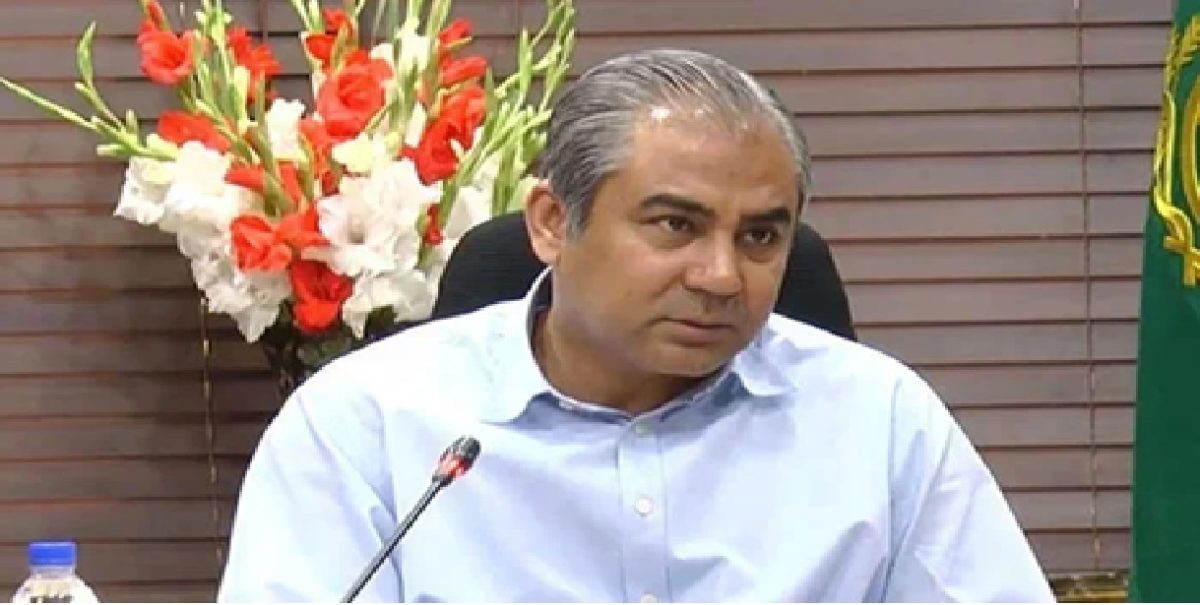
Mohsin Naqvi Warns India: Pakistan Ready for War if Historic Treaty Violated, Citing World Bank as Guarantor
In a strong and provocative statement, Pakistan’s Prime Minister Mohsin Naqvi has issued a stern warning to India, asserting that any unilateral attempt to alter or withdraw from the historic Indus Waters Treaty would be viewed as an act of aggression. Addressing a press conference in Islamabad, Naqvi emphasized that the treaty, brokered in 1960 with the assistance of the World Bank, is a binding international agreement that cannot be nullified or altered by one party alone.
The Indus Waters Treaty, considered one of the most successful water-sharing agreements in history, governs the distribution of the Indus River system between India and Pakistan. Despite multiple wars and decades of political tension, the treaty has endured, in part due to the World Bank’s role as a neutral guarantor. However, recent developments in South Asia have raised concerns that the long-standing accord may be under threat, prompting reactions from both sides of the border.
Naqvi accused India of making veiled threats and attempting to exploit water resources for political leverage. “India must remember that this treaty is not just a bilateral agreement—it has international backing,” Naqvi said. “The World Bank is the official guarantor, and any attempt to dismantle or violate it unilaterally will have serious repercussions.”
He went further to say that Pakistan is prepared to respond with full force if the treaty is jeopardized. “Let there be no misunderstanding—Pakistan does not want war, but we will not back down if forced into one. Our nation and our armed forces are fully prepared,” Naqvi declared, using what many interpreted as a veiled warning or ‘geedar bhabki’ (empty threat) aimed at deterring any unilateral moves by New Delhi.
Tensions over water have long been a point of contention between the two nuclear-armed neighbors. In recent years, India has increasingly expressed dissatisfaction with the treaty, arguing that Pakistan has repeatedly used it to block hydroelectric projects in Indian-administered Kashmir. India has hinted at reassessing its commitment to the treaty, citing national security and developmental concerns.
In response to Naqvi’s statement, Indian officials have yet to issue a formal reply, but sources within the Indian Ministry of External Affairs have described Pakistan’s comments as “unnecessary provocation.” Analysts believe this rhetoric may be aimed more at a domestic audience within Pakistan, especially given the current economic and political instability in the country.
International observers, including officials at the World Bank, have so far remained tight-lipped. However, the escalating rhetoric has raised concerns among global stakeholders, particularly regarding regional stability and water security in South Asia.
As the situation develops, it remains to be seen whether cooler heads will prevail or if both countries will allow nationalistic fervor to undermine a treaty that has long been a rare example of cooperation in a deeply divided region.