
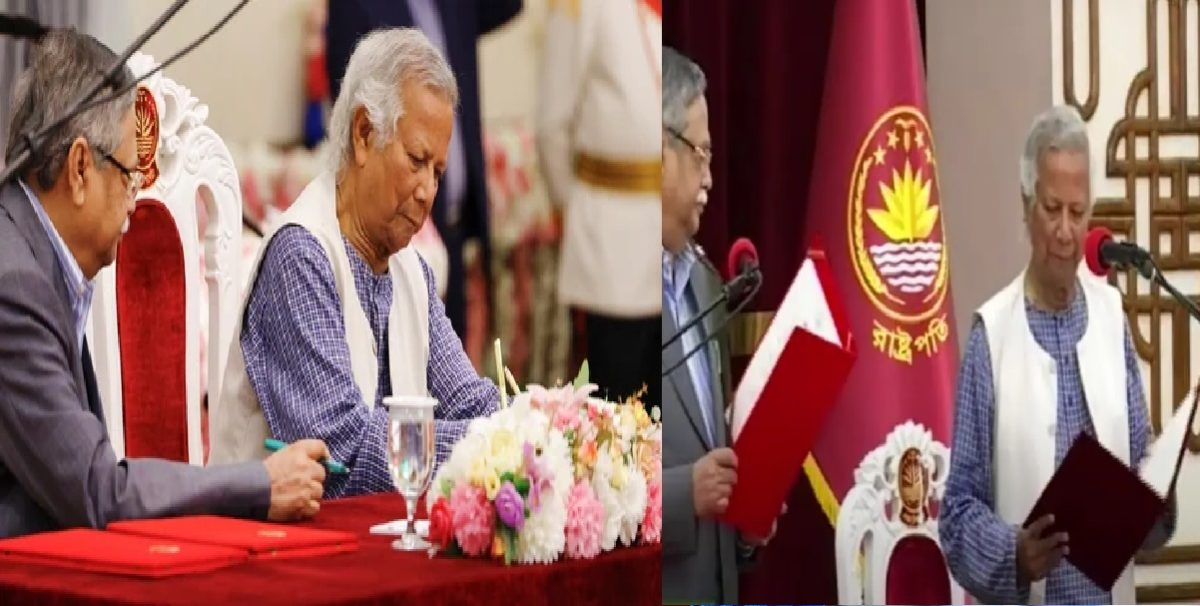
In a historic moment for Bangladesh, Muhammad Yunus, the Nobel laureate and renowned social entrepreneur, has been officially sworn in as the head of the country’s interim government. This landmark event marks a new chapter in Bangladesh’s political landscape, with Yunus’s appointment signifying both a symbolic and practical shift in the nation’s governance.
Muhammad Yunus, globally celebrated for his pioneering work in microfinance and social entrepreneurship, is perhaps best known for founding Grameen Bank, which has transformed the lives of millions by providing small loans to the impoverished without requiring collateral. His efforts in promoting economic development and social change have earned him international acclaim, including the Nobel Peace Prize in 2006. His transition from a celebrated economist and philanthropist to the head of the interim government represents a remarkable shift, reflecting the country’s desire for innovative leadership.
The ceremony, held at the Presidential Palace in Dhaka, was marked by a blend of solemnity and optimism. The swearing-in was attended by dignitaries from various sectors, including political leaders, diplomats, and members of the civil society, who witnessed the historic moment as Yunus took the oath of office. The event was broadcasted live, capturing the attention of the nation and the international community, symbolizing a moment of hope and potential for Bangladesh.
Yunus’s appointment comes at a time of significant political and economic challenges for Bangladesh. The country has faced various issues, including economic instability, political unrest, and social disparities. Yunus’s vision for an inclusive and equitable society, underscored by his work with Grameen Bank, is expected to influence his approach to governance. His leadership is anticipated to bring a fresh perspective to the interim government, focusing on sustainable development, poverty alleviation, and social justice.
In his inaugural speech, Yunus emphasized his commitment to addressing the pressing issues facing Bangladesh. He outlined his vision for the interim government, which includes a focus on economic reforms, strengthening democratic institutions, and promoting social welfare programs. Yunus highlighted the importance of collaboration between the government, private sector, and civil society to achieve these goals. His speech resonated with many, reflecting a shared hope for positive change and renewed progress.
The appointment of Yunus is also seen as a strategic move to bridge political divides and restore public trust in governance. His reputation as a reformer and advocate for the underserved is expected to lend credibility to the interim administration and inspire confidence among citizens. The interim government under Yunus is anticipated to play a crucial role in preparing the groundwork for future elections and ensuring a smooth transition to a more stable and democratic governance structure.
However, Yunus’s new role is not without its challenges. He faces the complex task of navigating the political landscape while addressing the economic and social issues that have long plagued Bangladesh. His ability to implement effective policies and garner support from various stakeholders will be critical to the success of his tenure.
Actor Shanto Khan and Father Killed in Brutal Attack Amid Bangladesh Unrest
In conclusion, Muhammad Yunus’s swearing-in as the head of Bangladesh’s interim government marks the beginning of a new era for the country. His appointment is a significant departure from traditional political leadership, bringing with it the promise of innovative solutions and a renewed focus on social equity. As Bangladesh embarks on this transformative journey, the eyes of the nation and the world will be closely watching Yunus’s leadership and its impact on the country’s future.