
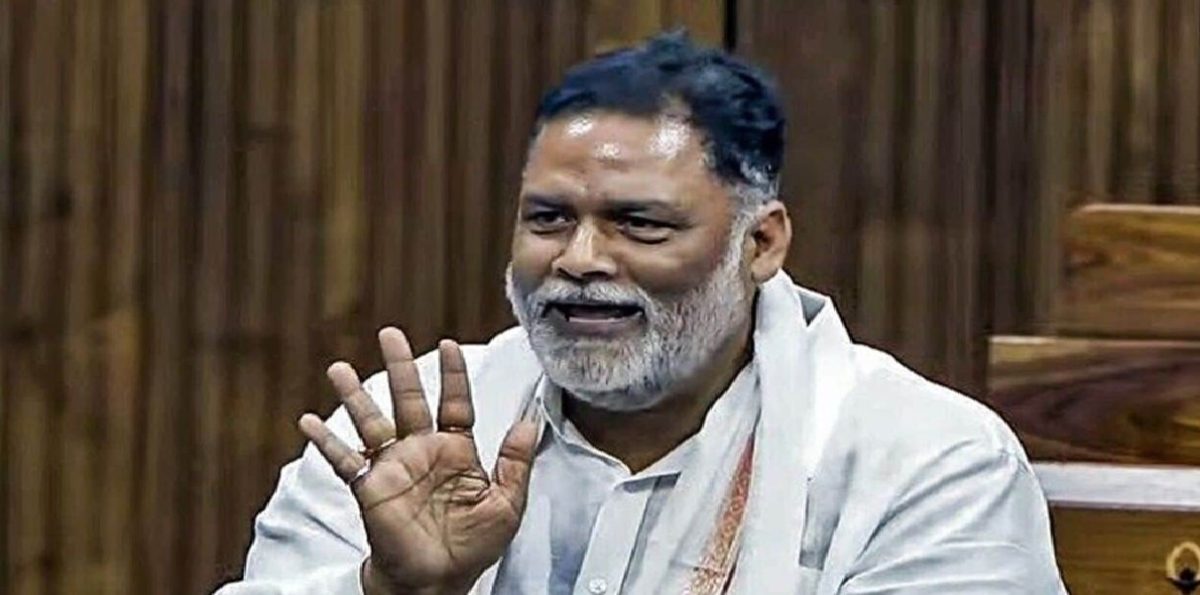
Pappu Yadav’s Explosive Allegations: EC-RSS Nexus Claim Turns Voter Roll Revision into a National Debate on Electoral Transparency and Fairness
The Indian political landscape has once again been rocked by controversy as politician Pappu Yadav made explosive claims regarding the ongoing voter roll revision process. By alleging a direct nexus between the Election Commission (EC) and the Rashtriya Swayamsevak Sangh (RSS), Yadav has not only stirred a storm but also reignited a national debate around the integrity, transparency, and fairness of India’s electoral process.
Speaking at a press briefing, Yadav called the voter roll revision a “do-or-die battle for democracy,” suggesting that behind the bureaucratic procedure lies a deeper agenda to manipulate electoral outcomes in favor of certain political ideologies. “We are witnessing a silent sabotage of democracy,” he claimed, adding that “the EC is no longer functioning as an independent constitutional body, but as an extension of the RSS.”
These remarks come amid mounting concerns in several states where voters and civil society groups have reported large-scale discrepancies in the revised electoral rolls. Allegations range from mass deletions of legitimate voters to selective inclusion based on political affiliations. While the Election Commission has dismissed these claims as procedural errors, Yadav and his supporters argue that there is a systematic attempt to disenfranchise specific sections of society, particularly marginalized communities and opposition voters.
Political and Public Reactions
Yadav’s allegations have drawn sharp reactions across the political spectrum. Leaders from ruling parties condemned the remarks as “irresponsible and inflammatory”, accusing him of undermining trust in democratic institutions. On the other hand, several opposition figures have echoed his concerns, demanding greater accountability and transparency from the EC regarding the revision process.
Legal experts and former election officials have also weighed in, some cautioning that while such accusations must be taken seriously, they should be backed with concrete evidence. Others, however, stress the need for a more transparent and participatory approach to voter roll management, especially in a democracy of India’s scale and complexity.
The Bigger Picture
This incident reflects a broader anxiety gripping Indian democracy. The credibility of electoral institutions — once seen as pillars of neutrality — is now being scrutinized more than ever. With general elections approaching, the stakes are high, and even minor discrepancies can lead to widespread mistrust among voters.
Civil society organizations have now called for independent audits of the revised voter lists and the establishment of public grievance mechanisms to address deletions and errors. The demand for transparency is growing louder, and Yadav’s fiery rhetoric has inadvertently given it national attention.
Conclusion
Whether one agrees with Pappu Yadav’s claims or not, his remarks have undoubtedly forced a reexamination of electoral procedures in India. At the very least, his intervention has pushed electoral transparency and institutional accountability to the forefront of national discourse — a much-needed conversation in any thriving democracy.