
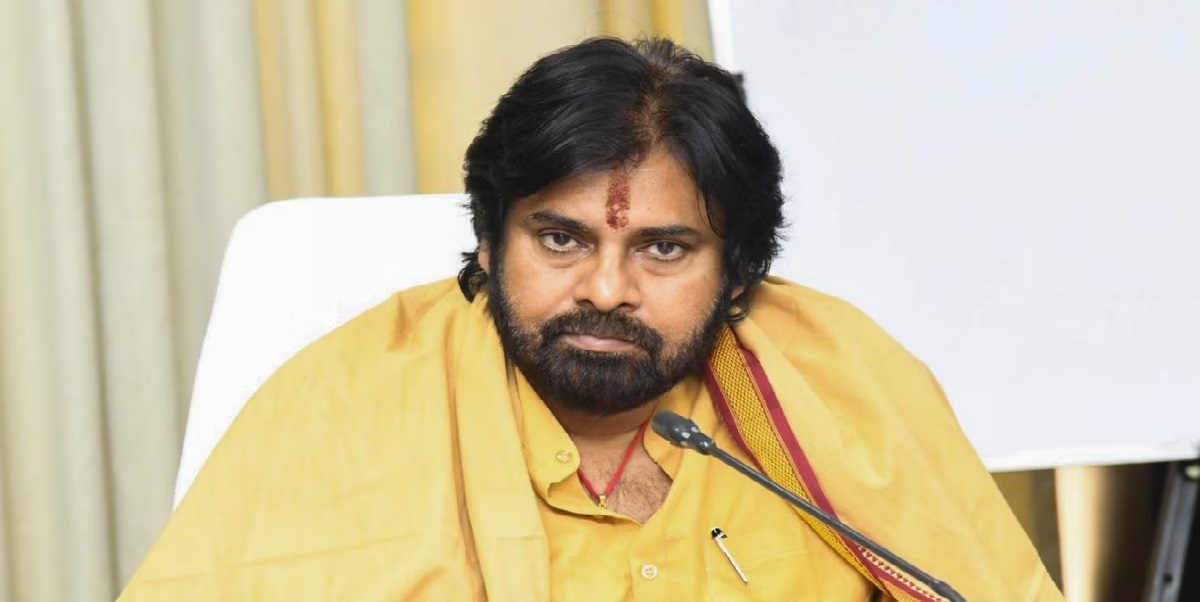
In a significant move that has garnered considerable attention in Indian political circles, Pawan Kalyan, the popular actor-turned-politician and leader of the Jana Sena Party, has announced the establishment of a Sanatana Dharma Protection Wing within his party. This initiative aims to promote and safeguard the principles and values of Sanatana Dharma, which encompasses a wide array of beliefs and practices rooted in the Indian cultural and spiritual heritage.
At the launch event, Kalyan emphasized the importance of respecting all religions while underscoring the need to protect and preserve the unique cultural identity of Sanatana Dharma. He articulated that the essence of Sanatana Dharma is not merely a set of rituals or beliefs, but a holistic way of life that has been woven into the fabric of Indian society for millennia. By establishing this wing, Kalyan seeks to foster a dialogue that highlights the significance of Sanatana Dharma, advocating for its role in promoting harmony, ethics, and values that transcend religious boundaries.
Kalyan’s initiative comes at a time when India is experiencing a complex interplay of cultural identities and religious sentiments. The launch of the Sanatana Dharma Protection Wing is a strategic response to concerns about the dilution of traditional values and the need to reinforce a sense of pride in India’s ancient heritage. Kalyan stated, “We must respect every religion and promote mutual understanding. However, we cannot overlook our roots and the teachings that have guided our civilization for centuries.”
The new wing is expected to engage in various activities, including educational programs, workshops, and public outreach campaigns aimed at raising awareness about the principles of Sanatana Dharma. Kalyan envisions a platform that not only educates party members and supporters but also the general public about the significance of these teachings in fostering unity and social cohesion.
Moreover, Kalyan’s approach to religious respect is particularly noteworthy. He advocates for a pluralistic society where diverse beliefs coexist peacefully. This is crucial in a country as varied as India, where the coexistence of multiple religions is both a strength and a challenge. By promoting a narrative of respect and understanding, Kalyan aims to mitigate conflicts that often arise from misinterpretations or lack of awareness about different cultural practices.
Critics of such initiatives often raise concerns about potential exclusivity or the risk of polarizing communities. However, Kalyan has sought to address these apprehensions head-on. He has consistently reiterated that the objective of the Sanatana Dharma Protection Wing is not to alienate or exclude any community but to create an inclusive environment that acknowledges and celebrates India’s diverse heritage.
Political analysts suggest that Kalyan’s move is also a calculated strategy to consolidate his support base among Hindus while reaching out to a broader audience that values cultural identity. The Jana Sena Party, which has primarily operated in Andhra Pradesh and Telangana, is positioning itself as a champion of traditional values while striving to maintain relevance in the rapidly evolving political landscape.
In conclusion, the launch of the Sanatana Dharma Protection Wing by Pawan Kalyan represents a significant step in his political journey and reflects a broader trend of cultural reaffirmation in contemporary Indian politics. By advocating respect for all religions while emphasizing the importance of Sanatana Dharma, Kalyan aims to create a narrative that resonates with many Indians seeking to reconnect with their cultural roots in an increasingly globalized world. This initiative could potentially reshape political discourse, fostering a deeper appreciation for India’s rich and diverse heritage.