
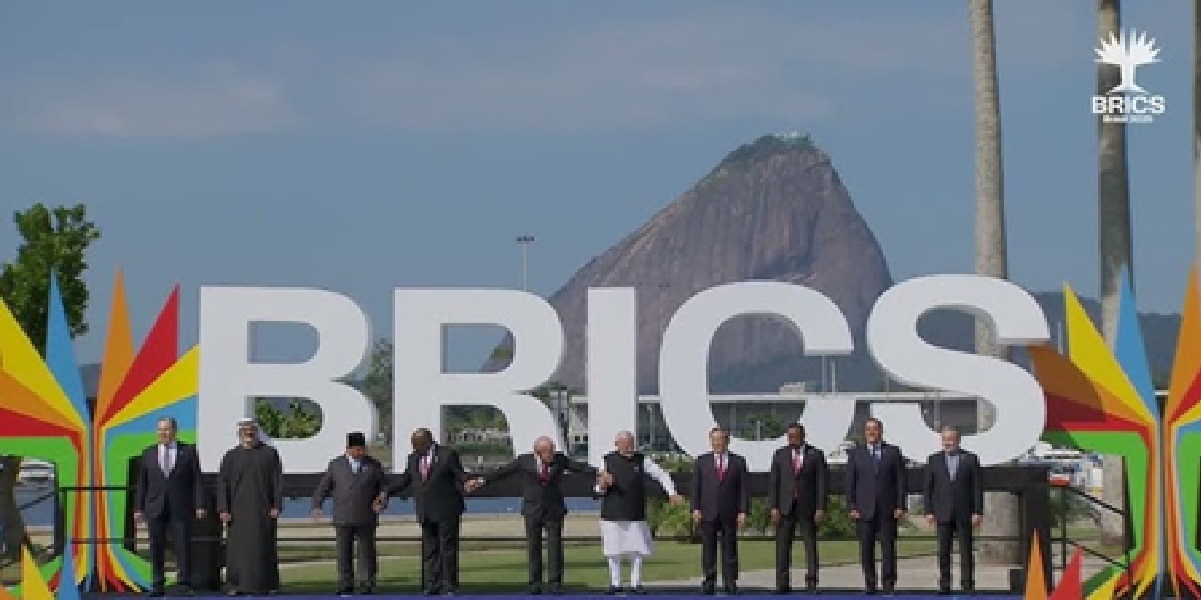
PM Modi Highlights Global Inequality at BRICS Summit, Urges Fair Treatment for Global South and Calls Out Western Double Standards
At the recent BRICS Summit, Prime Minister Narendra Modi delivered a powerful and thought-provoking address that resonated across the global political landscape. In his speech, he called attention to the persistent inequality in global governance structures and firmly criticized the ongoing “double standards” practiced by some Western powers. His message was clear: the voices of the Global South must be heard, respected, and included in shaping the future of the international order.
Modi emphasized that the current global institutions, many of which were established in the post-World War II era, no longer reflect the realities of the 21st century. He pointed out that countries in the Global South—many of which are in Africa, Asia, and Latin America—face significant challenges, including poverty, climate vulnerability, and lack of access to technology and capital. Despite this, their concerns are often sidelined in global forums, while a handful of powerful nations continue to dominate decision-making processes.
The Prime Minister did not mince words when calling out the selective approach of some Western countries. He noted how issues like human rights, climate change, and development are frequently viewed through a lens of convenience rather than consistency. “When rules change depending on who is involved, the very idea of justice is undermined,” Modi said. This strong condemnation of double standards reflects a growing sentiment among emerging economies that global governance needs urgent reform.
In addition to criticism, Modi also proposed a way forward. He called for a more inclusive and equitable international system where every nation’s voice carries weight. He urged BRICS—comprising Brazil, Russia, India, China, and South Africa—to take the lead in reforming institutions like the United Nations, the World Bank, and the International Monetary Fund (IMF). These organizations, according to him, must be more democratic, transparent, and responsive to the needs of developing nations.
Climate justice was another major theme in Modi’s address. He reiterated India’s commitment to sustainable development but stressed that climate commitments must be equitable. He reminded the international community that many Global South nations are suffering the most from climate change despite contributing the least to global emissions. Hence, they should receive adequate support—both financial and technological—from the developed world.
PM Modi’s speech was well-received by many in the BRICS alliance and beyond. It echoed the growing demand for fairness in global governance and highlighted India’s increasing role as a leading voice for the Global South. At a time when geopolitical tensions are high and the world is witnessing deepening divisions, Modi’s call for unity, justice, and inclusiveness struck a timely and necessary chord.
As the global order continues to evolve, the BRICS platform may emerge as a more influential counterweight to traditional Western-led institutions. Modi’s bold stance signals that India is not only willing to challenge the status quo but also ready to lead in shaping a more balanced and just world.