
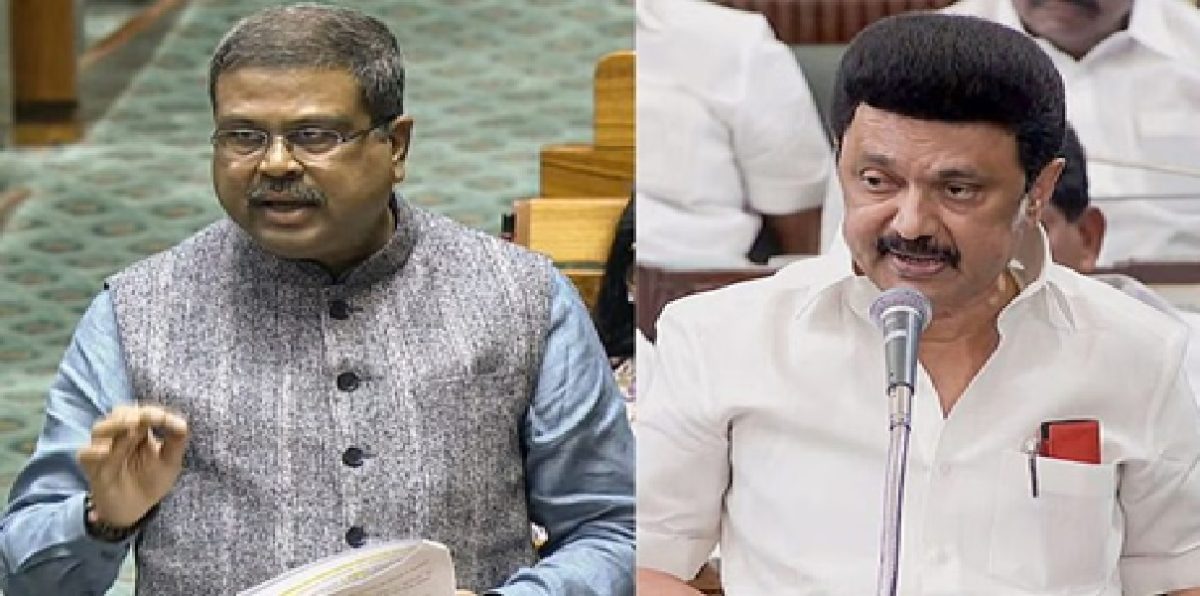
Stalin Hits Back at Dharmendra Pradhan: ‘You’re Insulting People of Tamil Nadu’ as NEP Debate Intensifies
The ongoing debate over the National Education Policy (NEP) has reached new heights, with Tamil Nadu Chief Minister M.K. Stalin engaging in a sharp war of words with Union Education Minister Dharmendra Pradhan. The issue centers around the contentious aspects of the NEP, particularly its emphasis on Hindi and its perceived threat to regional languages, leading to a clash of ideologies. Stalin has accused Pradhan of insulting the people of Tamil Nadu, further escalating the debate as both sides defend their positions.
The Core of the Dispute: The NEP and Language Concerns
The NEP, introduced in 2020, brought several reforms to India’s education system, including suggestions on curriculum restructuring, the medium of instruction, and language proficiency. One of the most contentious proposals has been the emphasis on Hindi as a compulsory language in schools, especially in non-Hindi speaking states like Tamil Nadu. The policy encourages the teaching of three languages in schools, with Hindi being strongly recommended as one of them, alongside English and the regional language.
In Tamil Nadu, the imposition of Hindi in schools has been a sensitive issue, as the state has long upheld the primacy of Tamil. The state has historically resisted any move to promote Hindi over Tamil, viewing it as an imposition on regional identity and culture. Stalin, who leads the Dravida Munnetra Kazhagam (DMK), a party deeply committed to safeguarding the Tamil language, has been vocal in his opposition to such provisions in the NEP.
Stalin’s Strong Response to Dharmendra Pradhan
The exchange between Stalin and Pradhan became heated when Dharmendra Pradhan made remarks in support of the NEP and its emphasis on Hindi, which Stalin took as an affront to Tamil pride. Stalin was quick to respond, accusing Pradhan of insulting the people of Tamil Nadu by undermining the state’s long-standing commitment to preserving the Tamil language.
In a statement, Stalin emphasized that Tamil Nadu has always embraced a pluralistic and inclusive approach to education, where regional languages are given importance alongside English. He warned that any attempt to impose Hindi on Tamil students would be strongly resisted. Stalin’s statement highlighted the state’s historical stance on protecting its linguistic and cultural identity, citing the Tamil Nadu Anti-Hindi agitations of the 1960s as evidence of the strong sentiments held by the people.
The Political Implications of the Debate
This debate is not just about language but also has significant political undertones. The DMK, under Stalin’s leadership, has always been a staunch advocate for regional autonomy and the protection of Tamil culture. The party’s strong stance on the language issue resonates deeply with its voter base, and Stalin’s response to Pradhan is seen as a way of asserting the party’s commitment to these values.
On the other hand, Pradhan and the central government argue that the NEP’s provisions, including the promotion of Hindi, are meant to unify the country and promote multilingualism. They argue that proficiency in Hindi, as one of India’s official languages, will enhance communication and opportunities for students across the nation. However, this perspective has not been well received in states like Tamil Nadu, where regional languages are seen as an integral part of identity and culture.
The Wider Impact of the NEP Debate
The dispute over the NEP has broader implications for federal-state relations in India. It highlights the tensions between the central government’s push for a more unified national identity and the states’ desire to preserve their regional languages and autonomy. Tamil Nadu’s response to the NEP is emblematic of the broader struggle many states face when it comes to central policies that are perceived as intrusive or one-size-fits-all.
As the debate continues, it is clear that language will remain a flashpoint in Indian politics. While the central government advocates for policies that it believes will create a more cohesive national framework, regional leaders like Stalin continue to defend their states’ linguistic and cultural uniqueness. The outcome of this clash could shape the future of education policy in India and its impact on regional autonomy.
In conclusion, Stalin’s sharp rebuke of Dharmendra Pradhan underscores the deep-rooted tensions over the NEP and its implications for language and identity in Tamil Nadu. As the debate intensifies, the issue of Hindi imposition versus the preservation of regional languages will continue to play a central role in shaping the educational and political landscape of the country.